Creative writing is often viewed as a solitary task: a child sitting alone with a blank page, waiting for inspiration to strike. However, for many young learners, especially middle schoolers in grade 7, this traditional setup can feel daunting or uninspiring. This is where an interactive learning platform for grade 7 comes into play. These platforms offer collaborative storytelling, an innovative approach that transforms writing into a dynamic, team-based activity. By sharing ideas, building on each other’s imagination, and co-creating narratives, children discover that writing can be engaging, social, and deeply rewarding.
The Power of Co-Creation in Creative Writing
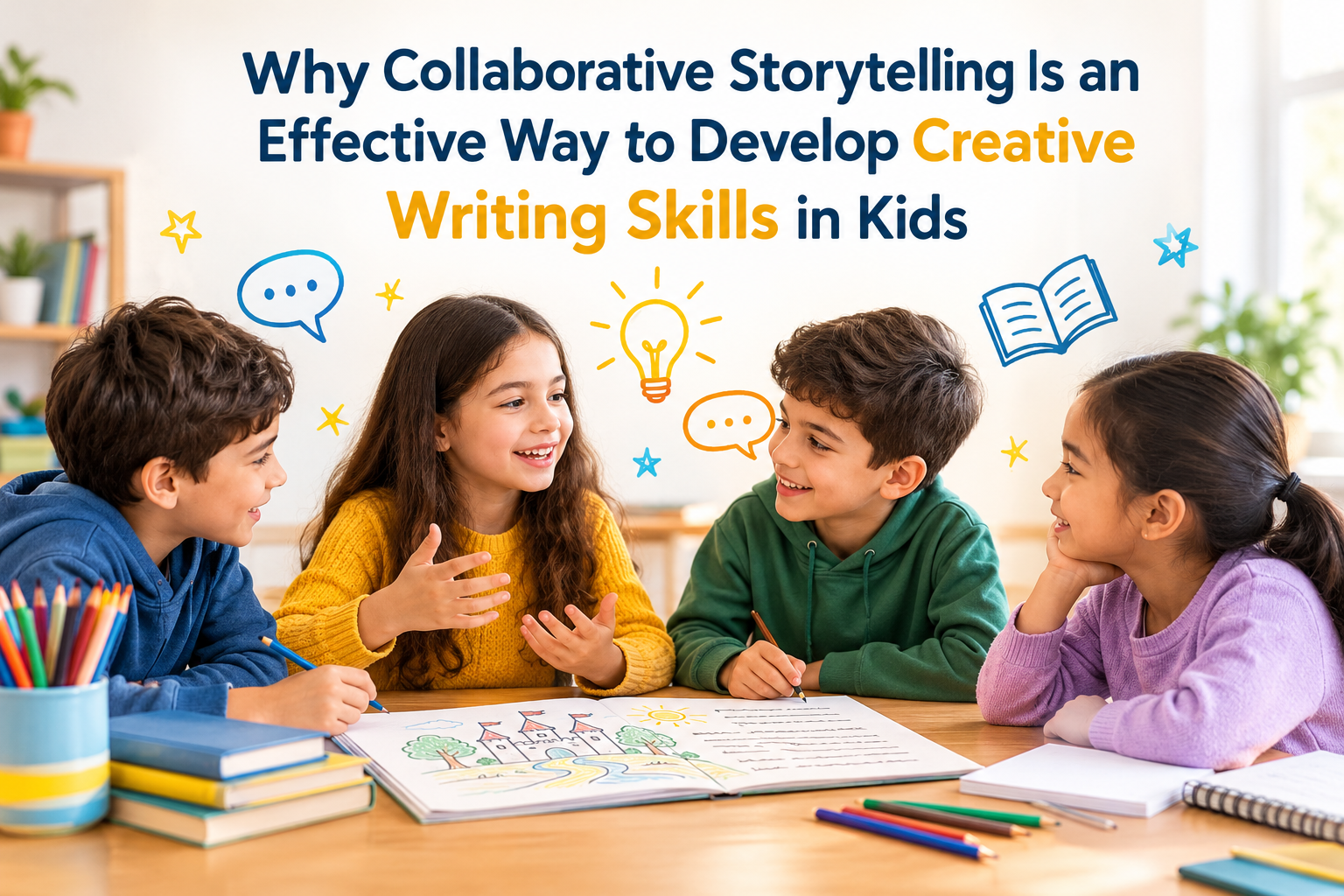
When kids work together to craft stories, the pressure of generating an entire narrative single-handedly vanishes. Instead of staring at an intimidating blank document, students bounce ideas off one another, sparking new plot twists and unique character arcs that they might never have imagined alone.
Collaborative story writing for kids introduces a multitude of cognitive and social benefits:
- Lowers Writing Anxiety: Sharing the creative burden helps reluctant writers feel more confident and willing to experiment with words.
- Enhances Critical Thinking: Kids learn to evaluate plot direction, make logical connections, and resolve story conflicts together.
- Fosters Empathy and Perspective-Taking: By building on peers’ ideas, students learn to appreciate different viewpoints and diverse narrative styles.
- Improves Peer Feedback: Constructive feedback happens naturally during the co-writing process, helping children refine their vocabulary and grammar seamlessly.
Why Grade 7 Is the Ideal Stage for Collaborative Writing
Collaborative story writing for kids in grade 7 matters because it represents a key transitional phase in a child’s academic journey. At this age, students are developing more complex abstract thinking skills, higher social awareness, and a desire for interactive learning environments. Traditional lectures or repetitive grammar drills often fail to keep 7th graders motivated.
Integrating collaborative story writing at this developmental stage leverages their natural inclination toward social interaction. By leveraging digital tools and group dynamics, students transition from passive readers to active creators who take pride in collective storytelling achievements.
Top Interactive Platforms Transforming Writing for Middle Schoolers
Modern educational technology makes implementing group storytelling effortless. If you are looking for an interactive learning platform for grade 7 students, here are three leading solutions making waves in literacy education:
1. Akshar Learning
Akshar Learning stands out as a renowned interactive learning platform for grade 7 learners, specifically designed to cultivate language mastery and collaborative skills. Its guided story-building modules allow students to co-create rich narratives in structured environments. With real-time collaboration features, vocabulary enhancements, and age-appropriate writing prompts, Akshar Learning makes collaborative story writing for kids both intuitive and highly educational.
2. Playablo
Playablo turns skill-building into an enjoyable, gamified journey. Designed to boost engagement across core subjects, Playablo offers bite-sized challenges and interactive elements that keep middle schoolers motivated. Its playful approach helps students practice grammar, vocabulary, and creative expression without feeling overwhelmed by lengthy written assignments.
3. Prodigy Education
Renowned for its game-based learning ecosystem, Prodigy Education captures students’ imaginations through fantasy-style adventures. While widely recognized for math, its expanding educational footprint incorporates interactive story elements and problem-solving scenarios that inspire young minds to think critically and express themselves creatively in group settings.
Practical Tips to Encourage Group Storytelling at Home or in Class
Whether you are an educator or a parent, facilitating group writing can be straightforward and fun. Consider these practical strategies:
- Start with Word Chains: Begin with a simple opening sentence and let each child add one paragraph or sentence at a time.
- Assign Distinct Roles: Give each student a specific responsibility, such as world-building, character development, or dialogue writing.
- Use Digital Tools: Introduce an interactive learning platform for grade 7 like Akshar Learning to structure group projects and track progress seamlessly.
Conclusion
Collaborative storytelling changes the narrative around creative writing. By turning a solo task into a shared adventure, kids learn to communicate effectively, think critically, and embrace the joy of storytelling. With platforms like Akshar Learning leading the way, empowering the next generation of confident writers has never been easier or more engaging.